Discover how non-surgical skin tightening works, explore available treatment options, understand realistic results and limitations, and learn what to consider before choosing a procedure.
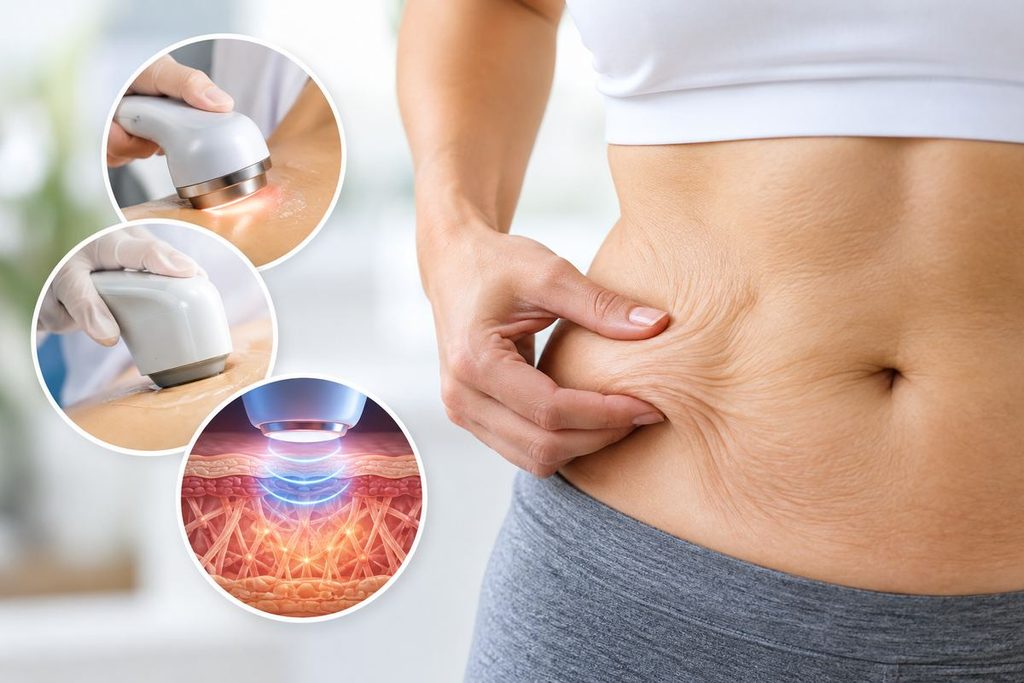
Loose skin can develop after significant weight loss, pregnancy, or as part of the natural aging process. If you are hoping to improve skin firmness without surgery, you may be wondering whether non-surgical treatments can actually tighten loose skin.
The answer depends on how much loose skin you have, the area being treated, and the technology used. Some treatments, including certain radiofrequency and ultrasound-based procedures, may improve the appearance of mildly loose skin. However, results vary, and these treatments generally cannot remove substantial amounts of excess skin.
In this guide, we’ll explore non-surgical skin-tightening options, explain what results you might realistically expect, discuss potential risks, and help you understand when surgical body contouring may be a more appropriate option.
If you’re comparing different approaches, our guides to non-surgical body contouring and body contouring after weight loss provide additional information.
Can Non-Surgical Treatments Actually Tighten Loose Skin?
Non-surgical treatments may improve the appearance of mildly loose skin, but they generally cannot remove large amounts of excess skin. The results depend on the treatment used, the degree of skin laxity, the area being treated, and individual factors.
Some treatments use radiofrequency energy or other forms of controlled heating to stimulate changes in the skin that may make it look firmer. Certain devices may also affect the underlying tissue. However, the amount of improvement varies, and more than one treatment may be needed.
It is important to distinguish skin tightening from fat reduction. A treatment designed to reduce a small pocket of fat does not necessarily tighten loose skin. Likewise, reducing fat beneath the skin may not correct sagging caused by substantial excess skin.
For people with mild skin laxity, a suitable non-surgical procedure may provide some visible improvement. However, people with significant loose skin following major weight loss may achieve more substantial results with surgical body contouring, which can remove excess skin.
Before choosing a treatment, consult a qualified healthcare professional who can assess your skin, explain realistic outcomes, and discuss the benefits, limitations, and risks of the available options.
What Causes Loose Skin?
Loose skin develops when the skin cannot fully return to its previous shape after being stretched. The skin contains proteins such as collagen, which provides structure and strength, and elastin, which helps it stretch and recoil. When these supporting structures lose some of their effectiveness, the skin may appear less firm.
Several factors can contribute to loose skin:
1. Significant weight loss
Losing a substantial amount of weight can leave excess skin, particularly around the abdomen, upper arms, thighs, breasts, and buttocks. When the skin has been stretched for a long time, it may not shrink sufficiently after the underlying body volume decreases.
2. Aging
As people age, their skin gradually loses some collagen and elastin. This can reduce firmness and elasticity, making sagging more noticeable.
3. Pregnancy
Pregnancy stretches the skin around the abdomen as the body changes. Some tightening may occur naturally after delivery, but the amount of recovery differs from person to person.
4. Genetics and individual skin characteristics
People differ in their natural skin elasticity and how their skin responds to changes in body size. These differences can influence how much loose skin develops and how well it recovers.
5. Prolonged stretching and sun exposure
Skin that has been stretched for a long time may not return completely to its former shape. Long-term exposure to ultraviolet radiation can also damage the skin’s supporting structures and contribute to reduced elasticity.
An important distinction
Loose skin and excess body fat are not the same thing. Excess fat is tissue beneath the skin, while loose skin involves the skin itself. Some people have both concerns, so a qualified healthcare professional can help determine which treatments may be appropriate.
Understanding the cause and severity of loose skin is important because treatments that reduce fat do not necessarily tighten skin, and treatments designed for mild skin laxity may not correct substantial excess skin.
Non-Surgical Skin-Tightening Options
Several non-surgical treatments are marketed to improve skin firmness and body contours. They use different technologies, and their effectiveness depends on the device, treatment area, and degree of skin laxity.
Some treatments may produce modest improvements in the appearance of mildly loose skin, but they cannot reliably remove substantial excess skin. It is also important to distinguish treatments designed to tighten skin from those intended primarily to reduce fat.
Below are some of the main options to understand before considering a procedure.
1. Radiofrequency Skin Tightening
Radiofrequency (RF) skin-tightening treatments use electrical energy to generate controlled heat in the skin and underlying tissues. Depending on the device and how it is used, the heating may stimulate collagen production or cause changes in tissue that make the skin appear firmer.
These treatments are used on selected areas of the body and face. However, the degree of improvement varies, and multiple sessions may be recommended.
Radiofrequency treatment is not a reliable substitute for surgery when substantial excess skin is present. Potential side effects include pain, redness, swelling, burns, changes in skin pigmentation, and scarring. Certain devices also have specific safety restrictions.
Important: Radiofrequency microneedling is not risk-free. The FDA has reported serious complications from certain uses, including burns, scarring, unwanted fat loss, and nerve damage. Discuss the exact device and its risks with a qualified healthcare professional before proceeding.
2. Ultrasound-Based Treatments
Some ultrasound-based devices deliver energy beneath the skin to heat targeted tissue. Depending on the technology and its intended use, a treatment may aim to improve skin firmness or reduce localized fat.
However, ultrasound treatments do not all have the same purpose. A device designed to reduce fat should not automatically be assumed to tighten loose skin.
Results vary, and treatments may cause discomfort, redness, swelling, burns, or nerve damage. People with certain implanted medical devices or metal in the treatment area may not be suitable candidates for some ultrasound procedures.
Before choosing a treatment, ask the provider what the specific device is designed to achieve and what evidence supports its use for your concern.
Other Energy-Based Skin-Tightening Treatments
3. Laser-Based Skin Treatments
Laser treatments use concentrated light energy to target specific structures in the skin. Depending on the type of laser and how it is used, treatment may improve skin texture, stimulate collagen remodeling, or address certain signs of skin aging.
However, laser treatments are not all designed for the same purpose. A procedure that improves skin texture or fine wrinkles may not significantly tighten loose skin on the abdomen, upper arms, or thighs.
Results depend on the treatment, the individual’s skin characteristics, and the severity of skin laxity. Potential risks include redness, swelling, burns, scarring, and changes in skin pigmentation.
Before treatment, ask a qualified provider whether the specific laser is appropriate for your body area and whether there is evidence that it can achieve the results you want.
4. Other Non-Surgical Body-Contouring Treatments
Some non-surgical body-contouring procedures use cooling, light, or electromagnetic energy to target localized fat or affect the appearance of treated areas.
However, reducing fat does not necessarily tighten loose skin. For example, cryolipolysis, commonly called fat freezing, is designed to reduce localized fat rather than remove excess skin.
The FDA warns that non-invasive body-contouring procedures can have side effects, and some complications may be serious. Fat-freezing treatments can occasionally cause paradoxical adipose hyperplasia, in which the treated area develops an unexpected increase in fat tissue rather than becoming smaller.
Before selecting a procedure, confirm its intended purpose, expected results, possible complications, and whether it is appropriate for your circumstances.
Important: No non-surgical treatment should be assumed to produce the same results as surgical removal of excess skin.
Which Areas of the Body Can Be Treated?
Non-surgical skin-tightening treatments may be used on selected areas of the body, but their suitability and effectiveness vary depending on the device, the treatment area, and the amount of loose skin.
Here are some common areas people ask about.
1. Abdomen
The abdomen may develop loose skin after pregnancy or significant weight loss. Some non-surgical treatments may offer modest improvements when the skin laxity is mild.
However, if substantial excess skin hangs over the lower abdomen, non-surgical procedures are unlikely to remove it. A tummy tuck may be an option for suitable candidates who need excess abdominal skin removed.
2. Upper Arms
Loose skin on the upper arms can occur with aging or after significant weight loss. Some treatments may improve the appearance of mildly loose skin, but results are generally more limited when there is substantial excess tissue.
An arm lift, also called brachioplasty, is a surgical procedure that removes excess skin from the upper arms.
3. Thighs
The inner and outer thighs may develop loose skin after major weight changes or as skin elasticity decreases with age. Selected non-surgical treatments may provide some improvement in mild cases, but they cannot reliably remove large folds of excess skin.
A thigh lift may be considered when excess skin is substantial and causes appearance concerns or physical discomfort.
4. Neck and Jawline
Some non-surgical treatments are designed to improve mild skin laxity around the neck and jawline. Results depend on the treatment used and the individual’s skin condition.
These treatments are generally less suitable for significant sagging or large amounts of excess skin. A qualified provider can explain which options are appropriate for the area being treated.
5. Buttocks and Other Body Areas
Some devices are marketed for use on the buttocks and other body areas. However, treatments designed to improve skin firmness, reduce fat, or change muscle appearance do not necessarily produce the same results.
Before undergoing treatment, confirm that the device is intended for the specific body area and concern. Ask about the available evidence, expected benefits, and potential risks.
Key takeaway: The amount of loose skin matters more than the body area alone. Mild skin laxity may respond differently from substantial excess skin following major weight loss.
Who May Benefit From Non-Surgical Skin Tightening?
Non-surgical skin-tightening treatments may be suitable for some people who want to improve mild skin laxity without undergoing surgery. However, suitability depends on the person’s skin condition, medical history, treatment goals, and the specific device being considered.
According to the American Society of Plastic Surgeons, non-surgical body-contouring treatments generally work best for carefully selected individuals who are near their goal weight and have relatively firm skin or only mild looseness.
People Who May Be Suitable Candidates
You may be a potential candidate if:
- You have mild skin laxity rather than large amounts of hanging excess skin.
- Your weight is relatively stable.
- You understand that improvements may be modest rather than dramatic.
- You prefer a non-surgical option and understand its limitations.
- A qualified healthcare professional determines that the treatment is appropriate for you.
Even when these factors apply, results are not guaranteed. Different devices have different intended uses, and not every treatment has strong evidence supporting its effectiveness for loose skin.
Who May Need Another Approach?
Non-surgical skin tightening may be less suitable if you have:
- Significant excess skin following major weight loss.
- Large folds of skin that cause irritation or interfere with daily activities.
- Expectations of results comparable to surgical skin removal.
- Medical conditions or other factors that make a particular device or procedure unsuitable.
For people with substantial excess skin, surgery may provide a more effective way to remove the unwanted tissue. A consultation with a qualified plastic surgeon can help determine whether surgery, a non-surgical procedure, or no procedure is the most appropriate choice.
Important: Being unsuitable for one treatment does not automatically mean that every other treatment is unsuitable. The decision should be based on an individual assessment.
What Results Can You Realistically Expect?
The results of non-surgical skin-tightening treatments vary depending on the technology used, the amount of loose skin, the treatment area, and individual skin characteristics.
Some people may notice a modest improvement in skin firmness or appearance. However, these treatments cannot reliably eliminate substantial excess skin, and results are generally less dramatic than those achievable through surgery.
Mild vs. Significant Loose Skin
Mild loose skin
People with mild skin laxity may experience some improvement following an appropriate treatment. The change may be gradual, and more than one session may be recommended, depending on the device and treatment plan.
Significant loose skin
People with substantial excess skin, particularly after major weight loss, are unlikely to achieve comparable results with non-surgical treatments. When large folds of skin remain, surgical procedures that remove excess tissue may be more effective.
When Will You Notice Results?
The time required to see results depends on the treatment. Some procedures may produce an initial visible change, while others rely on gradual tissue responses that develop over several weeks or months.
The number of sessions required also varies. Ask your provider when results are expected, how they will be assessed, and whether additional treatments may be necessary.
Why Results Differ Between Individuals
Several factors can influence the outcome:
- Skin elasticity: Skin with better elasticity may respond differently from skin that has lost substantial elasticity.
- Severity of skin laxity: Mild looseness is generally more suitable for non-surgical treatment than large amounts of excess skin.
- Treatment technology: Different devices work in different ways and may have different levels of supporting evidence.
- Age and individual characteristics: Skin quality and the body’s response to treatment vary.
- Weight stability: Significant weight changes can affect body contours and the appearance of loose skin.
It is important to have realistic expectations. A provider should explain the likely degree of improvement for your particular concern rather than promise dramatic or guaranteed results.
Evidence note: The U.S. Food and Drug Administration explains that non-invasive body-contouring technologies have different intended uses and limitations. You can review its guidance on FDA’s non-invasive body-contouring technologies.
How Long Do Non-Surgical Skin-Tightening Results Last?
The duration of results from non-surgical skin-tightening treatments depends on the technology used, the individual’s skin condition, the severity of skin laxity, and the body’s response to treatment.
Some people may maintain improvements for months or longer, but results are not necessarily permanent. Skin continues to age, and changes in body weight can affect the appearance of treated areas.
Factors That Affect How Long Results Last
Several factors may influence how long improvements remain visible:
- Treatment type: Different technologies produce different effects, so the expected duration of results varies.
- Age and skin quality: Natural changes in collagen and elastin continue over time.
- Weight fluctuations: Significant weight gain or loss may change body contours and affect the appearance of the skin.
- Lifestyle and sun exposure: Healthy habits and protecting exposed skin from excessive ultraviolet radiation can support overall skin health.
- Maintenance treatments: Some providers may recommend additional sessions, depending on the device and the individual’s response.
Can You Prevent Loose Skin From Returning?
No treatment can completely prevent the natural aging process or guarantee that loose skin will not develop again.
Maintaining a relatively stable weight, eating a balanced diet, getting adequate nutrition, and protecting your skin from excessive sun exposure can support general health and skin quality. However, these habits cannot reliably eliminate substantial excess skin that is already present.
Before paying for a treatment package, ask your provider how long improvements are expected to last, whether maintenance sessions may be needed, and what the total cost could be over time.
Important: Be cautious of advertisements promising permanent skin tightening or guaranteed results. Ask for realistic expectations based on the specific treatment and your individual circumstances.
Risks and Side Effects of Non-Surgical Skin-Tightening Treatments
Although non-surgical skin-tightening treatments do not usually require the incisions used in surgery, they are not risk-free. Possible side effects depend on the technology, the treatment area, the device settings, and the person’s health.
Before choosing a procedure, understand its potential complications and confirm that the provider is appropriately qualified to perform it.
Common Side Effects
Depending on the treatment, temporary side effects may include:
- Redness or swelling.
- Tenderness or discomfort.
- Bruising.
- Temporary changes in skin sensation.
- Skin irritation.
These effects may resolve on their own, but the expected recovery period varies by treatment.
More Serious Complications
Some procedures can cause more serious complications, including:
- Burns or blisters.
- Scarring.
- Changes in skin pigmentation.
- Nerve damage.
- Persistent pain or changes in sensation.
The U.S. Food and Drug Administration (FDA) also warns that certain non-invasive body-contouring procedures can cause complications specific to the technology used. For example, fat freezing can cause paradoxical adipose hyperplasia, a complication in which the treated area develops an unexpected increase in fat tissue rather than becoming smaller.
The risks are not identical across all devices. Ask your healthcare provider about complications associated with the exact procedure being considered.
How to Reduce Your Risk
You can make a more informed decision by taking the following precautions:
- Consult a qualified healthcare professional who understands the procedure.
- Ask whether the treatment is appropriate for your skin type, medical history, and treatment area.
- Confirm the device’s intended use and whether it is authorized or cleared for that purpose in your country.
- Discuss possible complications, expected recovery, and realistic results.
- Ask what follow-up care is available if a complication develops.
- Be cautious of providers who guarantee dramatic results or dismiss potential risks.
Do not choose a procedure solely because it is advertised as non-invasive or requires little recovery time. Non-surgical does not mean risk-free.
When Is Surgery a More Appropriate Option?
Although non-surgical treatments may help improve mild skin laxity, surgery may be a more appropriate option for people with substantial excess skin. This is particularly relevant after significant weight loss, when the skin may not shrink sufficiently to match the body’s new shape.
Surgical body-contouring procedures remove excess skin and, depending on the procedure, may also address underlying tissues. The appropriate option depends on the body area, the amount of excess skin, overall health, and individual goals.
Signs That Surgery May Be Worth Discussing
Consider consulting a qualified plastic surgeon if:
- You have large folds of loose skin that do not improve with time.
- Excess skin causes repeated irritation or interferes with physical activity.
- You have significant loose skin around your abdomen, upper arms, thighs, or other areas.
- You want more substantial improvement than non-surgical treatments are likely to provide.
- Your weight is relatively stable and you are considering surgical body contouring.
These factors do not automatically mean surgery is necessary. A professional assessment can help determine whether treatment is appropriate and which options may be available.
Common Surgical Options for Excess Skin
Different procedures address excess skin in different areas:
- Tummy tuck (abdominoplasty): Removes excess abdominal skin and may tighten separated abdominal muscles when appropriate.
- Arm lift (brachioplasty): Removes excess skin from the upper arms.
- Thigh lift: Removes excess skin from selected areas of the thighs.
- Lower body lift: Addresses excess skin around areas such as the abdomen, hips, buttocks, and thighs, depending on the surgical plan.
Surgery generally involves more recovery time and different risks from non-surgical treatments. Potential complications include bleeding, infection, poor wound healing, scarring, and complications related to anesthesia.
What If You Want to Avoid Surgery?
If you prefer not to undergo surgery, discuss the realistic benefits and limitations of available non-surgical treatments with a qualified healthcare professional.
Depending on your circumstances, it may also be reasonable to avoid procedures altogether. Exercise and healthy lifestyle habits can support general health and help maintain muscle, but they cannot reliably remove substantial excess skin.
Be cautious of products or programs claiming to eliminate significant loose skin without surgery. Ask for credible evidence before spending money on treatments that promise dramatic results.
For more information, read our existing guide: Tummy Tuck vs. Liposuction: What’s the Difference?
Non-Surgical Skin Tightening vs. Surgical Body Contouring
Non-surgical skin tightening and surgical body contouring can both address concerns about body appearance, but they work differently. Understanding these differences can help you decide which options to discuss with a qualified healthcare professional.
Key Differences
1. Main purpose
Non-surgical treatments aim to improve the appearance of mildly loose skin or alter body contours without surgically removing tissue.
Surgical body-contouring procedures remove excess skin and may reshape underlying tissues, depending on the procedure.
2. Expected results
Non-surgical treatments generally offer more modest improvements, particularly when the concern is loose skin rather than localized fat.
Surgery can provide more substantial changes when significant excess skin is present, although results vary and scars are expected.
3. Recovery time
Non-surgical procedures generally involve less recovery time than surgery, although temporary side effects and treatment-specific restrictions may occur.
Surgical procedures require recovery and wound care. The recovery period depends on the operation and the individual’s circumstances.
4. Risks
Non-surgical treatments can cause complications such as burns, swelling, changes in skin sensation, or other device-specific effects.
Surgery carries additional risks, including bleeding, infection, anesthesia-related complications, scarring, and delayed wound healing.
5. Cost
The cost of either approach varies according to the treatment, provider, location, and number of sessions or procedures required.
Non-surgical treatment may require multiple sessions or maintenance treatments. Surgery may involve a higher initial cost, along with follow-up care and recovery expenses.
Which Option May Be More Suitable?
Mildly loose skin
Some people with mild skin laxity may benefit from non-surgical skin-tightening treatments. Results depend on the technology used and individual skin characteristics.
Localized fat deposits
Treatments designed to reduce localized fat may be an option for selected individuals. However, fat reduction does not necessarily tighten loose skin.
Significant excess skin after weight loss
People with substantial excess skin may benefit more from surgical body contouring, which can remove excess tissue.
Loose abdominal skin and separated muscles
A tummy tuck may be appropriate for selected candidates who have excess abdominal skin and, in some cases, separated abdominal muscles.
Uncertainty about the cause of the problem
Consult a qualified healthcare professional before choosing a treatment. They can assess whether your concern involves excess fat, loose skin, or both.
The most appropriate option depends on your skin condition, medical history, treatment goals, and the risks you are willing to accept.
For more information, read our guides to Non-Surgical Body Contouring and Body Contouring After Weight Loss.
Questions to Ask Before Choosing a Treatment
Before choosing a non-surgical skin-tightening treatment, it is important to understand what the procedure can realistically achieve, what risks it carries, and whether it is appropriate for your circumstances.
A consultation with a qualified healthcare professional can help you make an informed decision. Consider asking the following questions.
1. Is This Treatment Suitable for My Skin?
Ask whether your degree of skin laxity is likely to respond to the treatment. A procedure designed for mild looseness may not provide meaningful improvement when substantial excess skin is present.
2. What Results Can I Realistically Expect?
.Ask how much improvement is reasonable to expect, when results may become visible, and how they will be assessed. Be cautious of guarantees or promises of dramatic results.
3. What Are the Possible Risks and Side Effects?
Ask about common side effects, serious complications, recovery requirements, and any risks associated with your medical history or skin type.
4. How Many Sessions Will I Need?
Some treatments may require multiple sessions. Ask how many sessions are typically recommended, how far apart they should be scheduled, and whether maintenance treatments may be necessary.
5. What Is the Total Cost?
Request a breakdown of the total expected cost, including consultations, treatment sessions, follow-up appointments, and possible maintenance procedures.
6. What Qualifications Does the Provider Have?
.Ask about the provider’s training and experience with the specific procedure. Confirm that the device is intended for your treatment area and that the provider can explain its limitations and potential complications.
7. Would Surgery Be More Effective for My Concern?
If you have substantial excess skin, ask whether surgical body contouring is likely to provide a more meaningful result. Understanding the alternatives can help you avoid spending money on treatments unlikely to meet your expectations.
Remember: A responsible provider should explain both the potential benefits and the limitations of a treatment, without pressuring you to purchase a package or undergo a procedure.
Frequently Asked Questions
Can non-surgical treatments completely remove loose skin?
No. Non-surgical treatments may improve the appearance of mildly loose skin, but they generally cannot remove substantial excess skin. People with significant skin laxity may need to consider surgical body contouring for more substantial improvement.
What is the best non-surgical treatment for loose skin?
There is no single best treatment for everyone. Radiofrequency and certain ultrasound-based procedures may improve mild skin laxity in selected individuals. The most appropriate option depends on the treatment area, the severity of the looseness, the specific device, and your medical history.
Can exercise tighten loose skin after weight loss?
Exercise can strengthen muscles and improve body composition, which may change the appearance of the body. However, it cannot reliably remove excess skin. People with substantial loose skin after significant weight loss may need a professional assessment to discuss other options.
Does losing more weight help tighten loose skin?
Not necessarily. Further weight loss may reduce body fat, but it can also make existing excess skin more noticeable. If you are still working toward a healthy weight, discuss an appropriate plan with a healthcare professional before considering body-contouring procedures.
How long does non-surgical skin tightening take to work?
The timeline varies by treatment. Some procedures may produce an initial visible change, while others may take several weeks or months to show their full effect. Ask your provider what timeline is realistic for the specific device being used.
Is non-surgical skin tightening permanent?
Not necessarily. Results vary and may diminish over time as the skin continues to age or body weight changes. Some treatments may require maintenance sessions, so ask about long-term expectations before committing.
Is non-surgical skin tightening safe?
These treatments are not risk-free. Depending on the technology, complications can include burns, swelling, bruising, changes in skin sensation, and other device-specific effects. Consult a qualified healthcare professional about the benefits and risks of the particular treatment you are considering.
Is non-surgical skin tightening worth the cost?
It may be worthwhile for someone seeking modest improvement in mild skin laxity who understands the limitations. However, it may not be cost-effective for someone with substantial excess skin if the expected results are unlikely to meet their goals. Consider the total cost, possible maintenance sessions, and alternative treatments before deciding.
Bottom Line
Non-surgical treatments may help improve the appearance of mildly loose skin, but their effectiveness depends on the technology used, the treatment area, and the severity of the skin laxity.
Radiofrequency and certain ultrasound-based treatments may provide modest improvements for selected individuals. However, these procedures cannot reliably remove substantial excess skin, particularly after significant weight loss.
Before choosing a treatment, consider its expected results, potential risks, recovery requirements, and total cost. Consult a qualified healthcare professional to determine whether a non-surgical procedure is appropriate for your circumstances.
If you have significant excess skin, surgical body contouring may provide a more substantial improvement. The best choice depends on your individual needs, health, and treatment goals.
The key takeaway: Understand what a treatment can realistically achieve before spending money on it. Non-surgical procedures may help with mild skin laxity, but they are not a substitute for surgical skin removal when substantial excess skin is present.
References
1. U.S. Food and Drug Administration (FDA)
Non-Invasive Body Contouring Technologies
2. American Society of Plastic Surgeons (ASPS)
Body Contouring Procedures Following Weight Loss
3. American Society of Plastic Surgeons (ASPS)