Why am I not losing weight even though I eat healthy and exercise regularly? If you’re asking yourself this question, you’re not alone. Weight loss can be affected by several factors, including portion sizes, sleep quality, stress, hormonal changes, certain medications, and daily activity levels. In this guide, you’ll discover seven possible reasons why you may not be losing weight and practical, evidence-based steps to help you work toward your weight-management goals.
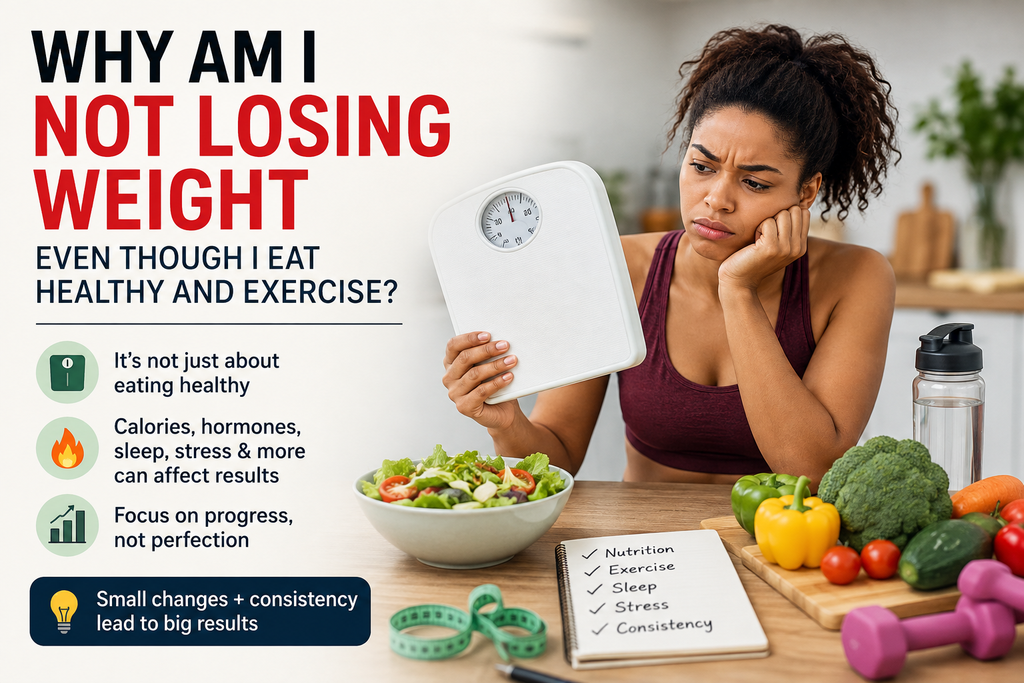
Losing weight can be frustrating when you’re eating nutritious foods and exercising regularly but the number on the scale doesn’t seem to change.
It can make you wonder whether you’re doing something wrong.
The reality is that healthy eating and exercise are important, but they don’t automatically guarantee weight loss. Your weight is influenced by total energy intake, activity, body composition, sleep, stress, medications, medical conditions and even temporary changes in water retention.
If you’re struggling to lose weight despite healthy habits, understanding these factors can help you decide what to review or discuss with a healthcare professional.
The NIDDK also explains that multiple factors can influence body weight and weight management.
Why Am I Not Losing Weight Despite Eating Healthy and Exercising?
Here are some of the most common reasons the scale may not be moving.
1. Healthy food can still contain calories
One of the most common misconceptions is that healthy foods cannot contribute to weight gain.
Foods such as:
- Nuts
- Avocados
- Olive oil
- Whole grains
- Nut butters
- Dried fruit
can all be part of a healthy diet, but they still provide calories.
If you’re consistently consuming more energy than your body uses, you may maintain or gain weight even when the foods you’re eating are nutritious.
The goal isn’t to eliminate healthy foods. Portion sizes and overall dietary intake still matter.
2. You may be gaining muscle while losing fat
If you’ve recently started resistance training, something interesting can happen.
You may lose some body fat while gaining or maintaining muscle.
Because muscle contributes to body weight, the scale might change very little even though your body composition is improving.
Look for other signs of progress, such as:
- A smaller waist
- Clothes fitting differently
- Increased strength
- Improved fitness
- Changes in body measurements
This is one reason body weight shouldn’t be your only measure of progress.
3. You may be overestimating calories burned through exercise
Exercise is excellent for your health, but it’s easy to overestimate how much energy a workout actually uses.
For example, someone might complete a workout and then unknowingly compensate by eating more afterward or moving less during the rest of the day.
Exercise should therefore be viewed as part of an overall healthy lifestyle rather than a way to “cancel out” unlimited food intake.
4. Liquid calories can add up quickly
Some drinks contain considerably more calories than people realize.
Examples include:
- Sugar-sweetened soft drinks
- Sweetened coffee
- Sweetened tea
- Energy drinks
- Alcohol
- Some fruit drinks
Because liquids can be less filling than solid foods, it’s possible to consume a substantial amount of energy without feeling particularly satisfied.
Choosing water or unsweetened drinks more often can make calorie management easier.
5. You’re judging your progress too soon
Body weight naturally fluctuates from day to day.
Changes in:
- Sodium intake
- Carbohydrate intake
- Hydration
- Digestion
- Exercise
- Hormonal changes
can temporarily affect the number on the scale.
For that reason, don’t conclude that your plan isn’t working because your weight hasn’t changed after a few days.
Look at the trend over several weeks rather than individual weigh-ins.
6. Your calorie deficit may have disappeared
When people lose weight, their energy requirements can gradually decrease.
Your body is now carrying less weight, so it may require slightly less energy to maintain itself and perform everyday activities.
A diet that previously produced weight loss may eventually produce weight maintenance.
This is one reason weight loss often becomes slower over time.
7. Sleep may be working against you
Sleep is often overlooked when people focus on diet and exercise.
Insufficient or poor-quality sleep can make appetite regulation and healthy eating more difficult.
Instead of focusing exclusively on food and exercise, aim for a consistent sleep schedule and adequate sleep.
8. Stress can make weight management harder
Chronic stress doesn’t mean that your body will automatically gain fat, but it can influence behaviors that affect weight.
For example, stress may make it harder to:
- Control portions
- Choose nutritious foods
- Sleep adequately
- Maintain an exercise routine
Finding realistic ways to manage stress can therefore support your overall weight-management efforts.
9. You may be eating more than you realize
Even people who eat mostly nutritious foods can underestimate their total intake.
Small additions can accumulate:
- Cooking oils
- Sauces
- Dressings
- Snacks
- Sweetened drinks
- Large portions
- Weekend meals
You don’t necessarily need to count every calorie forever, but temporarily tracking your food intake can help identify where additional calories may be coming from.
10. Certain medications or medical conditions can affect weight
Sometimes persistent difficulty losing weight isn’t simply a matter of diet or exercise.
Certain medications and medical conditions can influence body weight, appetite, metabolism or fluid balance.
If you’ve been consistently following a reasonable nutrition and exercise plan but aren’t seeing the expected changes—or you’re experiencing unexplained weight gain—it’s worth discussing the situation with a healthcare professional.
Don’t stop taking prescribed medication simply because you think it may be affecting your weight.
What if the scale isn’t changing but your waist is getting smaller?
This can actually be a positive sign.
If you’re exercising regularly, particularly with resistance training, you may be improving your body composition.
For someone whose primary goal is reducing abdominal fat, waist circumference can sometimes provide useful information that the scale doesn’t capture.
If reducing belly fat is your main goal, you may also find our guide on how to lose belly fat naturally helpful.
Consider tracking:
Body weight + waist measurement + progress photos + strength + how your clothes fit.
Looking at several measures gives you a better picture of what’s happening.
What should you do if you’re not losing weight?
Instead of making drastic changes, start by reviewing the basics:
Check your portions
Even nutritious foods can provide more calories than you need when portions are consistently large.
Prioritize protein and fiber
Protein-rich and fiber-rich foods can help you feel satisfied and support a nutritious diet.
For more information about food choices that may support healthy body composition, see our guide to foods that support belly-fat loss.
Healthy eating and regular physical activity are important parts of long-term weight management.
Continue strength training
Resistance training can help preserve or build muscle while you’re working toward improved body composition.
Stay physically active
Walking and other forms of regular movement complement structured exercise.
Reduce sugary drinks
Replacing high-calorie drinks with water or unsweetened alternatives can be an easy improvement.
Get enough sleep
Don’t underestimate the importance of consistent, adequate sleep.
Be patient
Sustainable changes generally take time.
Don’t fall for the “faster is better” approach
If you’re frustrated by slow progress, it can be tempting to try:
- Extremely low-calorie diets
- Detoxes
- Fat-burning supplements
- Excessive cardio
- Long periods of fasting
- Completely eliminating carbohydrates
These approaches aren’t necessarily better, and some can be difficult or unsafe to maintain.
A sustainable approach is usually more useful than trying to force rapid results.
Frequently Asked Questions
Can I lose fat without losing weight?
Yes. If you lose body fat while maintaining or gaining muscle, your body weight may remain relatively stable while your body composition improves.
Why is my weight going up even though I’m exercising?
Temporary water retention, increased muscle mass, changes in carbohydrate or sodium intake and other factors can cause the scale to rise even when you’re making positive changes.
Should I exercise more if I’m not losing weight?
Not necessarily. First look at your overall diet, activity level, recovery and consistency. More exercise isn’t always the solution.
Should I stop eating healthy fats?
No. Healthy fats can be part of a balanced diet. The important consideration for weight management is your overall dietary intake and portion sizes.
When should I talk to a doctor?
If you’re experiencing unexplained weight gain, significant difficulty managing your weight despite consistent efforts, or other concerning symptoms, speak with a qualified healthcare professional.
The Bottom Line
Eating healthy and exercising are excellent foundations, but weight loss depends on more than simply choosing “healthy” foods and working out.
Portion sizes, overall energy intake, muscle gain, water retention, sleep, stress, medications and medical conditions can all influence what happens to your weight.
If your goal is specifically to reduce belly fat, don’t judge your progress solely by the bathroom scale.
Focus on improving body composition, maintaining muscle, reducing excess body fat and developing habits you can sustain long term.
Progress may be slower than you expect, but slow and sustainable progress is generally more valuable than a quick result that doesn’t last.
Pingback: Weight Loss Plateau: 5 Reasons Your Progress Stalls