How Much Sugar Should You Eat Each Day? What You Need to Know
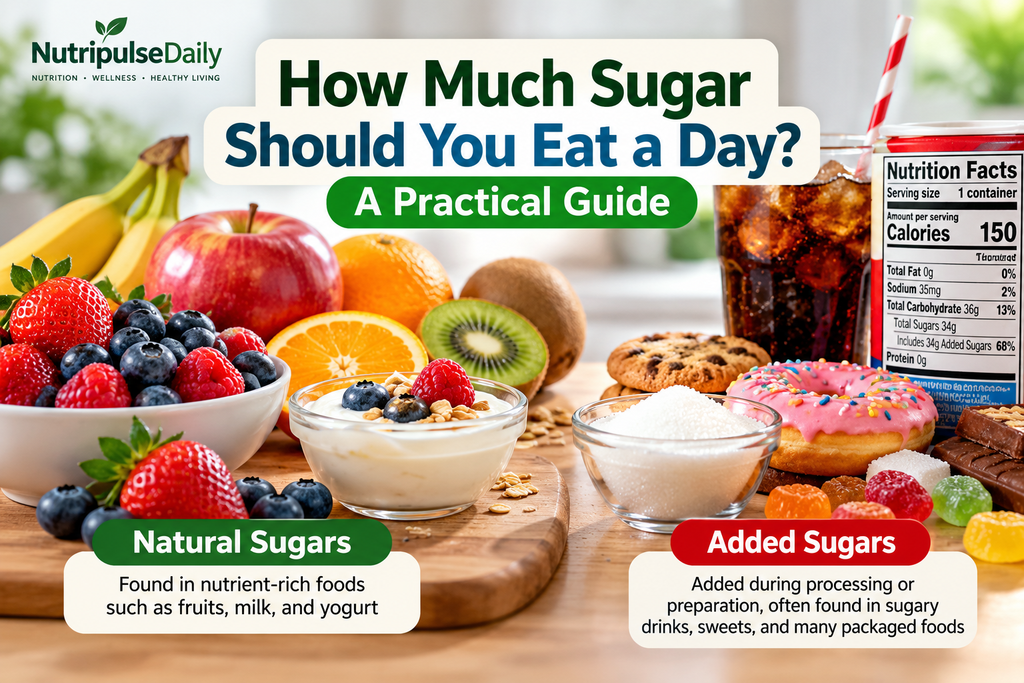
How much sugar should you eat a day? The answer depends mainly on how much added sugar you consume, rather than the naturally occurring sugars found in whole foods such as fruit and milk.
Sugar is found naturally in many foods, including fruits, vegetables, and milk. It is also added to many foods and drinks during processing or preparation. Understanding the difference between naturally occurring sugar and added sugar can help you make more informed choices about your diet.
Eating some sugar can be part of a healthy eating pattern, but many people consume more added sugar than recommended. Added sugars can contribute calories without providing much nutritional value, especially when they come from sugary drinks, desserts, sweetened snacks, and other highly processed foods.
How much sugar you should eat depends on what type of sugar you’re consuming. For added sugars, U.S. dietary guidance recommends limiting intake rather than trying to eliminate naturally occurring sugars found in nutritious foods.
In this guide, we’ll explain how much sugar you should eat each day, what counts as added sugar, how to distinguish added sugar from natural sugar, which foods commonly contain added sugars, and practical ways to reduce your intake.
How Much Sugar Should You Eat Each Day?
When it comes to sugar, the most important number to pay attention to is added sugar, rather than the naturally occurring sugars found in whole foods such as fruit and milk.
The U.S. Food and Drug Administration (FDA) uses a Daily Value of 50 grams of added sugar per day based on a 2,000-calorie diet. This is a general reference, not a personal target that everyone must reach.
The Dietary Guidelines for Americans recommend limiting calories from added sugars to less than 10% of total daily calories for people ages 2 and older. For someone eating 2,000 calories per day, that is less than 200 calories from added sugar, or about 50 grams.
Your individual needs may be different depending on your total calorie intake and overall eating pattern. The goal is not to eliminate sugar completely, but to keep added sugar within a reasonable amount while prioritizing nutrient-dense foods.
What Counts as Added Sugar?
Added sugars are sugars that are added to foods or beverages during processing, preparation, or packaging. They can include common ingredients such as table sugar, brown sugar, honey, syrups, and ingredients made from concentrated sugars.
Added sugar can appear in many different types of products, including soft drinks, sweetened coffee and tea, desserts, candy, sweetened breakfast cereals, flavored yogurt, sauces, and some packaged snacks.
On the Nutrition Facts label in the United States, Added Sugars are listed separately from Total Sugars. This makes it easier to distinguish sugar that has been added to a food from sugars that naturally occur in the food.
Not every food that contains sugar is necessarily high in added sugar. For example, whole fruit contains naturally occurring sugar along with fiber and other nutrients. Plain milk also contains naturally occurring lactose. Looking at the Added Sugars line on the Nutrition Facts label can help you determine how much added sugar a packaged food contains.
Added Sugar vs. Natural Sugar: What’s the Difference?
Not all sugars have the same role in your diet. The key difference is whether the sugar occurs naturally in a food or has been added during processing or preparation.
Naturally occurring sugars are found naturally in foods such as whole fruits, vegetables, and milk. These foods can also provide nutrients such as fiber, vitamins, minerals, protein, or calcium, depending on the food.
Added sugars are incorporated into foods or beverages during manufacturing, cooking, or preparation. Examples include sugar added to soft drinks, desserts, sweetened cereals, flavored yogurt, sauces, and baked goods.
For example, the sugar in a whole apple occurs naturally and comes with fiber and other nutrients. A soft drink may contain a similar type of sugar chemically, but it generally provides little nutritional value beyond its calories.
This distinction is why reducing added sugar does not mean that you need to avoid nutritious foods simply because they contain naturally occurring sugar. Instead, focus on limiting foods and drinks that provide large amounts of added sugar while making nutrient-dense foods the foundation of your eating pattern.
How Much Added Sugar Is Too Much?
There is no single amount of added sugar that is considered appropriate for every person because daily calorie needs differ. However, U.S. dietary guidance recommends keeping calories from added sugars to less than 10% of total daily calories for people ages 2 and older.
For someone eating 2,000 calories per day, that works out to fewer than 200 calories from added sugar, or about 50 grams of added sugar per day. The FDA uses 50 grams as the Daily Value shown on Nutrition Facts labels.
It’s also important to remember that the 50-gram figure is a general reference based on a 2,000-calorie diet. Someone who needs fewer or more calories may have a different practical limit.
Added sugar can accumulate quickly when several foods and drinks containing sugar are consumed throughout the day. A sugary beverage at breakfast, sweetened coffee, a packaged snack, and dessert can together contribute a substantial amount of added sugar.
Rather than focusing on completely eliminating sugar, pay attention to your overall eating pattern and look for opportunities to reduce foods and drinks that are high in added sugar.
Common Foods and Drinks High in Added Sugar
Added sugar can be found in many foods and beverages, including some products that may not taste extremely sweet. Learning where added sugar commonly appears can make it easier to reduce your intake.
Sugary drinks: Regular soda, fruit-flavored drinks, energy drinks, sports drinks, sweetened iced tea, and other sweetened beverages can contain substantial amounts of added sugar.
Desserts and sweets: Cakes, cookies, pastries, ice cream, candy, and other desserts are common sources of added sugar.
Sweetened breakfast foods: Some breakfast cereals, granola products, breakfast bars, and flavored oatmeal can contain added sugar.
Sweetened dairy products: Flavored yogurt, sweetened milk drinks, and some dairy-based desserts may contain added sugar.
Sauces and condiments: Ketchup, barbecue sauce, sweet chili sauce, salad dressings, and other condiments can contribute added sugar, particularly when used in larger amounts.
Packaged snacks: Some snack bars, crackers, baked snacks, and other processed foods may contain added sugar even when they are not considered desserts.
You don’t necessarily need to eliminate these foods completely. Checking the Nutrition Facts label and comparing products can help you identify options with less added sugar.
How Added Sugar Can Affect Your Diet and Weight
Added sugar can make it easier to consume more calories than your body needs, particularly when sugary foods and drinks are consumed frequently. This is partly because many foods high in added sugar provide calories without supplying much fiber, protein, or other nutrients.
Sugary drinks can be particularly easy to consume quickly because they provide calories without requiring much chewing. Replacing some sugar-sweetened beverages with water or unsweetened drinks can be one practical way to reduce added sugar intake.
However, weight management depends on your overall calorie intake, eating pattern, physical activity, and other factors. It would be inaccurate to say that sugar alone causes weight gain or that simply eliminating sugar guarantees weight loss.
Reducing foods and beverages that are high in added sugar can nevertheless make it easier to build a nutrient-dense eating pattern and manage calorie intake. This can be especially helpful when those foods are replaced with options that provide protein, fiber, vitamins, minerals, and other nutrients.
How to Reduce Added Sugar Without Giving Up Sweet Foods
Reducing added sugar does not mean you have to eliminate every sweet food from your diet. Small changes can make it easier to lower your intake while still enjoying the foods you like.
Choose unsweetened drinks more often. Water, sparkling water, and unsweetened tea or coffee can help reduce the amount of added sugar you get from beverages.
Compare packaged foods. When shopping, check the Nutrition Facts label and compare the amount of added sugar between similar products. Choosing the option with less added sugar can make a meaningful difference over time.
Choose plain versions when practical. Plain yogurt, oatmeal, and other foods can often be sweetened naturally with fruit, cinnamon, or other ingredients instead of relying on added sugar.
Reduce sugar gradually. If you’re accustomed to very sweet foods or drinks, reducing the amount gradually may make the transition easier.
Be mindful of portions. You can still occasionally enjoy desserts or other sweet foods while keeping your overall added sugar intake in check. Paying attention to portion sizes can help you enjoy them without making them a major part of your diet.
Build meals around nutritious foods. Eating enough protein, fiber-rich foods, fruits, vegetables, and whole grains can help create satisfying meals and leave less room for foods that provide mostly added sugar.
How to Read Added Sugar on a Nutrition Facts Label
Nutrition Facts labels can help you identify how much added sugar a packaged food or drink contains. In the United States, the label lists both Total Sugars and Added Sugars under the Carbohydrates section.
Total Sugars includes both naturally occurring sugars and added sugars.
Added Sugars shows the amount of sugar that has been added during processing or preparation.
For example, a plain yogurt may contain naturally occurring sugar from lactose but little or no added sugar. A flavored yogurt may contain both naturally occurring sugar and added sugar.
The % Daily Value (%DV) can also help you put the amount into context. The FDA uses 50 grams per day as the Daily Value for added sugars based on a 2,000-calorie diet. As a general guide, 5% DV or less is considered low, while 20% DV or more is considered high.
When comparing similar products, looking at the Added Sugars line can help you choose options that fit your dietary goals.
Healthier Ways to Satisfy a Sweet Craving
Wanting something sweet is normal, and you don’t necessarily have to avoid sweet foods completely. The key is finding ways to enjoy sweetness while keeping added sugar within a reasonable range.
Choose whole fruit. Berries, apples, oranges, bananas, and other fruits provide natural sweetness along with fiber and other nutrients.
Add fruit to plain foods. Try adding berries or sliced banana to plain yogurt or oatmeal instead of choosing a heavily sweetened version.
Try naturally flavorful ingredients. Cinnamon, vanilla, unsweetened cocoa powder, and other spices can add flavor without relying on large amounts of added sugar.
Choose smaller portions of desserts. If you want a cookie, piece of chocolate, or another dessert, a smaller portion can allow you to enjoy it while keeping your overall added sugar intake lower.
Make your own snacks when possible. Preparing foods at home gives you more control over how much sugar is added.
Don’t rely on artificial restriction. Completely banning every sweet food isn’t necessary for most people. A balanced eating pattern can include occasional treats while still emphasizing nutritious foods.
Frequently Asked Questions
How much sugar should you eat a day?
There is no single amount of sugar that applies to everyone. For added sugar, U.S. guidance recommends keeping intake below 10% of total daily calories. The FDA uses 50 grams per day as the Daily Value for added sugars based on a 2,000-calorie diet.
Is 50 grams of sugar a day too much?
Fifty grams is the FDA’s Daily Value for added sugars based on a 2,000-calorie diet. It is not a requirement to consume 50 grams each day. In general, less added sugar is preferable when it can be achieved while maintaining a balanced and nutritious diet.
What is the difference between added sugar and natural sugar?
Natural sugars occur naturally in foods such as whole fruit and milk. Added sugars are incorporated into foods or beverages during processing or preparation. Whole foods containing natural sugar can also provide important nutrients such as fiber, vitamins, minerals, or protein.
Does sugar cause weight gain?
Consuming more calories than your body uses over time can contribute to weight gain, and foods or drinks high in added sugar can make it easier to consume excess calories. However, sugar alone does not determine whether someone gains or loses weight.
Should you stop eating sugar to lose weight?
You generally do not need to eliminate all sugar to manage your weight. A more practical approach is to limit foods and drinks high in added sugar while emphasizing nutritious foods such as vegetables, fruits, whole grains, protein-rich foods, and other minimally processed foods.
What foods have the most added sugar?
Common sources include sugary drinks, candy, desserts, sweetened breakfast cereals, sweetened yogurt, baked goods, and some packaged snacks and sauces. Checking the Added Sugars line on the Nutrition Facts label can help identify foods that contain substantial amounts.
Bottom Line
Sugar can be part of a balanced diet, but it is useful to pay particular attention to added sugar. U.S. dietary guidance recommends keeping calories from added sugars below 10% of total daily calories, while the FDA uses 50 grams per day as the Daily Value based on a 2,000-calorie diet.
You don’t need to eliminate all sugar from your diet. Instead, focus on limiting foods and drinks that are high in added sugar while choosing more nutrient-dense foods such as fruits, vegetables, whole grains, protein-rich foods, and other minimally processed options.
Reading Nutrition Facts labels, choosing unsweetened products when practical, and making small changes to your everyday eating habits can help you reduce added sugar without feeling that you have to give up every sweet food you enjoy.
If you have specific dietary needs or a medical condition that affects your diet, consider speaking with a qualified healthcare professional or registered dietitian for personalized guidance.
References
1. U.S. Food and Drug Administration (FDA) — Added Sugars on the Nutrition Facts Label
2. U.S. Food and Drug Administration (FDA) — How to Understand and Use the Nutrition Facts Label.
3. Centers for Disease Control and Prevention (CDC) — Healthy Eating Tips
4. Centers for Disease Control and Prevention (CDC) — Be Smart About Sugar
5. Centers for Disease Control and Prevention (CDC) — Tips for Healthy Eating for a Healthy Weight