Learn how to support a safer recovery after liposuction or a tummy tuck, including realistic healing timelines, wound care, nutrition, gradual movement, and important precautions to discuss with your surgeon.
Liposuction and tummy tuck surgery can significantly change the appearance of the body, but the result doesn’t happen immediately. Your body needs time to recover from the surgery, swelling needs to settle, and the tissues need to heal.
If you’ve had—or are considering—liposuction or a tummy tuck, you may be wondering:
A good recovery after liposuction depends on proper aftercare, adequate rest, healthy nutrition, and following your surgeon’s recommendations.
A successful recovery after liposuction requires patience, proper aftercare, adequate nutrition, and careful attention to your surgeon’s instructions.
Learn more about medical body contouring treatments and the options available for addressing stubborn areas of fat.
What is the fastest way to recover?
The safest answer is that recovery shouldn’t be rushed.
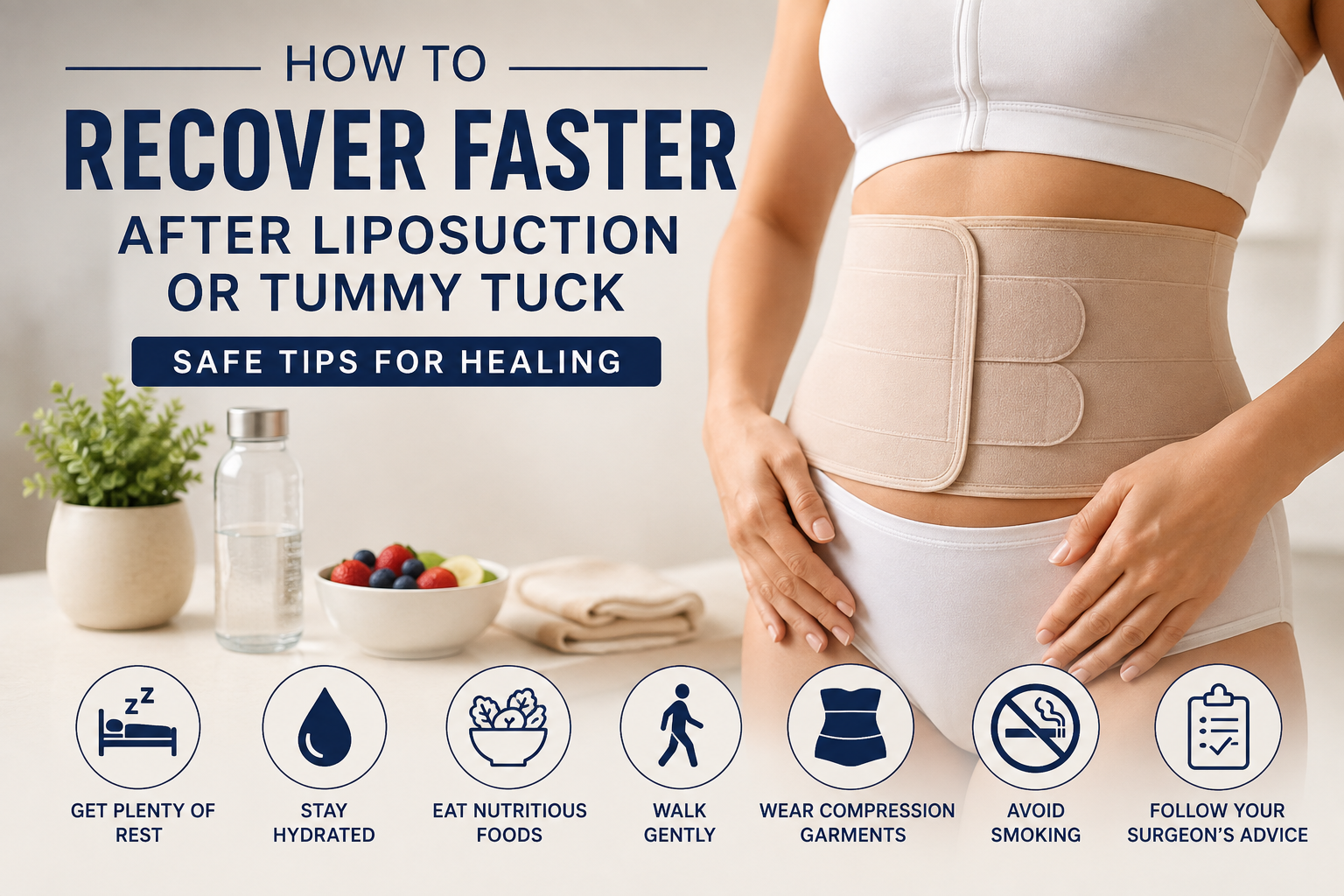
The best way to support a smooth recovery is to follow your surgeon’s instructions carefully, protect the surgical area, eat adequately, move gradually, and give your body enough time to heal.
How Long Does Recovery Take?
Recovery varies from person to person and depends on the procedure.
Liposuction and tummy tuck surgery are also different procedures.
Liposuction removes fat from specific areas using a cannula, while a tummy tuck (abdominoplasty) involves removing excess skin and fat and may also involve tightening the abdominal muscles.
Because a tummy tuck is more extensive surgery, recovery can be more demanding.
You may experience:
- Swelling
- Bruising
- Tenderness
- Tightness
- Temporary numbness
- Limited mobility
- Changes in the appearance of the treated area
These symptoms generally improve as healing progresses, but the timeline varies between individuals.
The NHS notes that recovery from a tummy tuck can take several weeks, with some people requiring approximately 4–6 weeks away from work and exercise, depending on the individual and the nature of their surgery.
Your surgeon’s recovery timeline should take priority over any general timeline you find online.
1. Follow Your Surgeon’s Instructions
This is the most important recovery principle.
Your surgeon may provide instructions regarding:
- Wound care
- Medications
- Compression garments
- Drains
- Showering and bathing
- Sleeping positions
- Walking
- Exercise
- Returning to work
- Follow-up appointments
These instructions are individualized because your procedure, health status and recovery may differ from someone else’s.
Don’t replace your surgeon’s instructions with advice from social media, forums or online articles.
2. Start Gentle Movement When You’re Cleared
After surgery, staying completely still for prolonged periods isn’t necessarily the best approach.
Your surgical team may encourage gentle walking relatively early in recovery.
Walking can help you gradually return to normal activity and is an important part of postoperative mobility.
However, gentle walking is very different from strenuous exercise.
Don’t assume that because you can walk comfortably, you’re ready to:
- Run
- Lift heavy weights
- Perform abdominal exercises
- Do intense cardio
- Return to strenuous work
Your surgeon should tell you when these activities are appropriate.
3. Don’t Lift Heavy Objects Too Soon
Heavy lifting can place stress on healing tissues, particularly after a tummy tuck.
This can include more than gym weights.
Depending on your circumstances, lifting may include:
- Heavy shopping bags
- Suitcases
- Furniture
- Children
- Household equipment
Ask your surgical team when you can safely resume heavier lifting.
If you’re uncertain whether an activity is too strenuous, it’s better to ask your surgeon than to assume.
4. Wear Compression Garments as Directed
After liposuction or tummy tuck surgery, your surgeon may recommend a compression garment or abdominal binder.
These garments may help support the treated area and manage swelling during recovery.
However, more compression isn’t necessarily better.
Wear the garment according to your surgeon’s instructions regarding:
- Type
- Fit
- Duration
- When to remove it
- When you can stop using it
Don’t use an excessively tight garment in an attempt to make swelling disappear faster.
5. Eat Enough Protein
Your body requires energy and nutrients to repair tissue after surgery.
Protein is particularly important because it provides amino acids needed for tissue maintenance and repair.
Good protein sources include:
- Eggs
- Fish
- Chicken
- Lean meat
- Greek yogurt
- Milk
- Beans
- Lentils
- Tofu
- Other protein-rich foods
Try to include a protein source in your meals rather than drastically restricting your food intake after surgery.
6. Don’t Start a Crash Diet After Surgery
This is especially important for people who had liposuction or a tummy tuck for body-contouring purposes.
You may be tempted to use the recovery period to lose additional weight quickly.
That isn’t necessarily a good idea.
Your body needs adequate energy and nutrients while healing. Severe calorie restriction may make it harder to meet your nutritional needs.
Instead, focus on balanced, nutrient-dense meals and follow any dietary instructions given by your medical team.
7. Stay Hydrated
Adequate hydration is important for normal bodily functions during recovery.
Unless your doctor has instructed you to restrict fluids, drink regularly throughout the day.
Water should generally be your main beverage.
You don’t need special “detox” drinks to flush the anesthesia or accelerate tissue healing.
8. Avoid Smoking
Smoking is particularly concerning after surgery because it can interfere with blood flow and wound healing.
Nicotine can constrict blood vessels, potentially reducing oxygen delivery to healing tissues.
If you smoke or use nicotine products, discuss this honestly with your surgeon.
Your surgeon may recommend stopping before surgery and remaining smoke-free during recovery.
9. Get Adequate Sleep and Rest
Healing requires energy.
Although you should gradually become more mobile as instructed, you also need adequate rest.
Try to establish a comfortable sleep routine and follow any positioning recommendations provided by your surgical team.
Don’t interpret “rest” as remaining in bed all day unless your surgeon specifically tells you to do so.
The goal is a balance between appropriate movement and adequate recovery time.
10. Don’t Massage the Surgical Area Without Approval
You may encounter advice online recommending massage to reduce swelling or speed recovery.
Some surgeons may recommend specific forms of postoperative massage in certain circumstances, but that doesn’t mean massage is appropriate for everyone.
After surgery, tissues are healing and the correct technique, timing and pressure matter.
Don’t massage the treated area unless your surgeon or qualified postoperative care provider has approved it.
11. Keep Your Follow-Up Appointments
Follow-up appointments aren’t simply routine paperwork.
They allow your surgeon to evaluate:
- Incision healing
- Swelling
- Bruising
- Drain sites
- Possible fluid accumulation
- Signs of infection
- Overall recovery
Even if you feel well, keep your scheduled appointments unless your medical team tells you otherwise.
What About Supplements for Faster Healing?
Be cautious about supplements marketed as products that can dramatically accelerate postoperative recovery.
“Natural” doesn’t automatically mean safe after surgery.
Some supplements can interact with medications or potentially affect bleeding and other aspects of recovery.
Before taking a supplement after surgery, ask your surgeon or another qualified healthcare professional whether it is appropriate for you.
This is particularly important if you’re taking prescription medications.
What Should You Avoid During Recovery?
Trying to recover faster by doing too much can actually create setbacks.
Avoid:
- Strenuous exercise before clearance
- Heavy lifting before clearance
- Smoking
- Crash dieting
- Excessive alcohol
- Unapproved supplements
- Aggressive massage without medical approval
- Tightening compression garments excessively
- Ignoring worsening symptoms
- Comparing your recovery timeline with someone else’s
Your body doesn’t necessarily heal at the same speed as another person’s.
Warning Signs You Shouldn’t Ignore
Some discomfort, swelling and bruising can be expected after surgery.
However, certain changes require medical attention.
Contact your surgical team if you develop symptoms that concern you, particularly if they are getting worse rather than improving.
Potential warning signs can include:
- Increasing or severe pain
- Increasing swelling
- Significant redness or warmth around the incision
- Wound separation
- Unusual or increasing drainage
- Fever
- Signs of infection
- Sudden changes in the treated area
Seek urgent medical attention for severe symptoms such as significant difficulty breathing, chest pain, fainting, or other symptoms suggesting a medical emergency.
Don’t wait for an online answer if you think you may be experiencing a serious complication.
Liposuction vs. Tummy Tuck Recovery
It’s worth remembering that these procedures aren’t interchangeable.
Liposuction primarily removes localized fat.
Tummy tuck surgery removes excess skin and fat and may involve tightening the abdominal wall.
Because a tummy tuck involves more extensive tissue alteration, recovery can be longer and more restrictive.
Your surgeon can give you a much more accurate recovery timeline based on the specific procedure performed.
Before choosing a procedure, learn more about how medical body contouring can target stubborn fat and what results you can realistically expect.
When Can You Exercise Again?
There isn’t one universal date that applies to everyone.
A typical recovery involves gradually increasing activity rather than immediately returning to your previous exercise routine.
You may begin with gentle walking and progress according to your surgeon’s instructions.
More demanding activities—including heavy lifting, running and abdominal exercises—usually require additional healing time.
Don’t use the absence of pain as your only guide.
You may feel better before the underlying tissues have completely healed.
Can You Speed Up the Healing Process?
You can’t safely force your body to heal on an artificial timetable.
But you can avoid behaviors that interfere with recovery.
The most useful approach is:
Follow medical instructions + eat adequately + stay hydrated + move appropriately + rest + avoid smoking + attend follow-ups.
That’s much safer than looking for a shortcut.
Frequently Asked Questions
Can I walk after liposuction or a tummy tuck?
Your surgeon may encourage gentle walking relatively early, but the appropriate amount depends on your procedure and individual recovery. Follow the specific instructions you were given.
Can I exercise to get rid of swelling faster?
Exercise shouldn’t be used to force swelling away. Start with the activity your surgical team recommends and increase it only when you’ve been cleared.
Can I lose weight immediately after surgery?
It’s generally better to prioritize healing rather than pursue aggressive weight loss immediately after surgery. Discuss your diet and weight goals with your healthcare team.
Does drinking more water make recovery faster?
Adequate hydration is important, but drinking excessive amounts of water won’t make your tissues heal instantly.
Do supplements speed up recovery?
There isn’t a universal supplement that guarantees faster recovery. Some supplements can also interact with medications or affect bleeding, so discuss them with your healthcare provider before taking them.
Final Thoughts
The fastest safe recovery after liposuction or a tummy tuck isn’t about finding a shortcut.
It’s about giving your body the conditions it needs to heal.
Follow your surgeon’s instructions, eat nutritious meals with adequate protein, stay hydrated, walk when permitted, avoid smoking, get enough rest, and don’t return to strenuous activity before you’ve been cleared.
Most importantly, don’t compare your recovery with someone else’s.
Your procedure, health, surgical technique and healing response are individual.
If you have concerns about your recovery, your surgeon or surgical team is the most appropriate source of advice.
Sources and Further Reading
- American Society of Plastic Surgeons — Tummy Tuck Recovery
- American Society of Plastic Surgeons — Liposuction Recovery
- NHS — Tummy Tuck (Abdominoplasty)
- World Health Organization — Tobacco and Postsurgical Outcomes